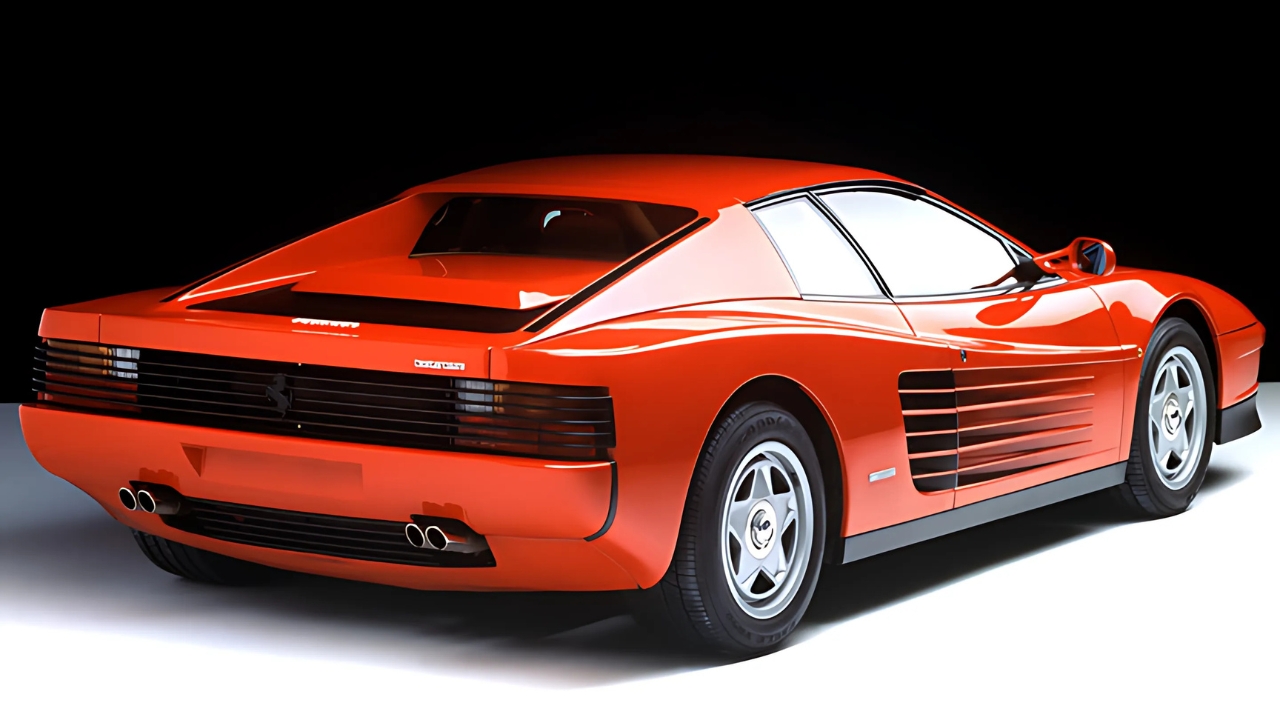
Image Credit: Ferrari | Iconic V-12 Italian Supercar
When you think of Italian supercars, images of roaring engines, blistering speeds, and sleek designs probably come to mind. However, not every high-performance car from the golden era of supercars lived up to expectations. One particular Italian masterpiece, despite boasting a powerful V-12 engine, struggled to reach 180 mph—a speed many modern sports cars easily surpass. This anomaly sparks curiosity and sheds light on the intricate balance of design, technology, and performance that defines luxury cars.
The heart of this iconic supercar was its V-12 engine—a configuration synonymous with luxury brands and high-performance vehicles. V-12 engines are celebrated for their smooth power delivery, high rev limits, and exhilarating soundtracks. Yet, despite this mechanical marvel under the hood, the car fell short of the performance benchmarks that defined the supercar segment.
The engine itself wasn’t the issue—it produced ample horsepower and torque. Instead, the car’s limitations stemmed from factors like aerodynamics, weight distribution, and drivetrain inefficiencies. This highlights a crucial point in automotive design: raw power doesn’t always translate to top speed.
Aerodynamics play a pivotal role in a car’s ability to cut through the air and achieve high speeds. Luxury car brands invest heavily in wind tunnel testing and computational fluid dynamics to refine their vehicle designs. In the case of this supercar, its design—while visually stunning—created too much drag, hindering its ability to reach higher speeds.
Additionally, the car’s bodywork, designed to prioritize aesthetics and downforce, inadvertently compromised straight-line performance. Modern supercars strike a careful balance between downforce for cornering stability and reduced drag for top speed—something early designs sometimes overlooked.
Image Credit: Ferrari | Italian supercar
Weight is another critical factor in a car’s performance. Despite the use of lightweight materials, the supercar’s chassis and luxurious interior added substantial bulk. This extra weight limited the car’s acceleration and overall speed potential.
Furthermore, the weight distribution and suspension setup, optimized for handling rather than outright speed, contributed to the car’s performance ceiling. Luxury sports cars today benefit from advanced materials like carbon fiber and titanium, drastically reducing weight without sacrificing strength or luxury.
The car’s transmission system also played a role in its speed limitations. Gear ratios determine how efficiently an engine’s power is transferred to the wheels. In this case, the gearing prioritized acceleration and mid-range power delivery over top-end speed.
Modern luxury car reviews often praise the latest supercars for their sophisticated dual-clutch transmissions and adaptive gearing, which allow for both rapid acceleration and staggering top speeds. This evolution in transmission technology is a testament to how far the industry has come.
Despite its speed limitations, this supercar remains a beloved icon. It represents an era when automakers pushed boundaries and experimented with technology to deliver the most exhilarating driving experiences possible. The car’s design, engine, and driving dynamics laid the groundwork for future innovations.
Today, luxury car companies build on this legacy, incorporating cutting-edge technology to enhance every aspect of performance. From active aerodynamics and hybrid powertrains to advanced electronic stability systems, modern supercars blend art and science in ways early designers could only dream of.
Owning or even seeing one of these rare Italian supercars in person is a reminder of the passion and craftsmanship that define the automotive world. For collectors and enthusiasts, the car’s imperfections are part of its charm—a snapshot of a transformative period in luxury car history.
This car’s story is a testament to the relentless pursuit of speed and excellence that drives the industry forward. It reminds us that even the most imperfect supercars contribute to the ongoing evolution of high-performance vehicles.
While this Italian supercar’s inability to break 180 mph (ca. 290 km/h) might seem like a flaw, it’s actually a fascinating chapter in the history of luxury automobiles. It illustrates the complex interplay of design, engineering, and innovation that shapes every vehicle on the road.
Whether you’re a supercar enthusiast, a collector, or simply someone who appreciates automotive history, this car’s legacy is a reminder that perfection isn’t always necessary to create something truly extraordinary. Occasionally, the limitations of the past become the inspiration for the breakthroughs of the future.
Image Credit: Jaguar | Jaguar Type 01 The Jaguar Type 01 arrives with three electric…
Image Credit: Volkswagen | Volkswagen ID Tiguan The Volkswagen ID Tiguan gives the brand’s electric…
Image Credit: Ferrari | Ferrari 296 Modificata The Ferrari 296 Modificata cannot compete in conventional…
Image Credit: Land Rover | Classic Land Rover EV A Classic Land Rover EV sounds…
Image Credit: Ferrari | The Ferrari Luce For decades, Ferrari’s identity lived in sound. A…
Image Credit: Bugatti | bugatti veyron update Back in 2005, the Bugatti Veyron didn’t just…