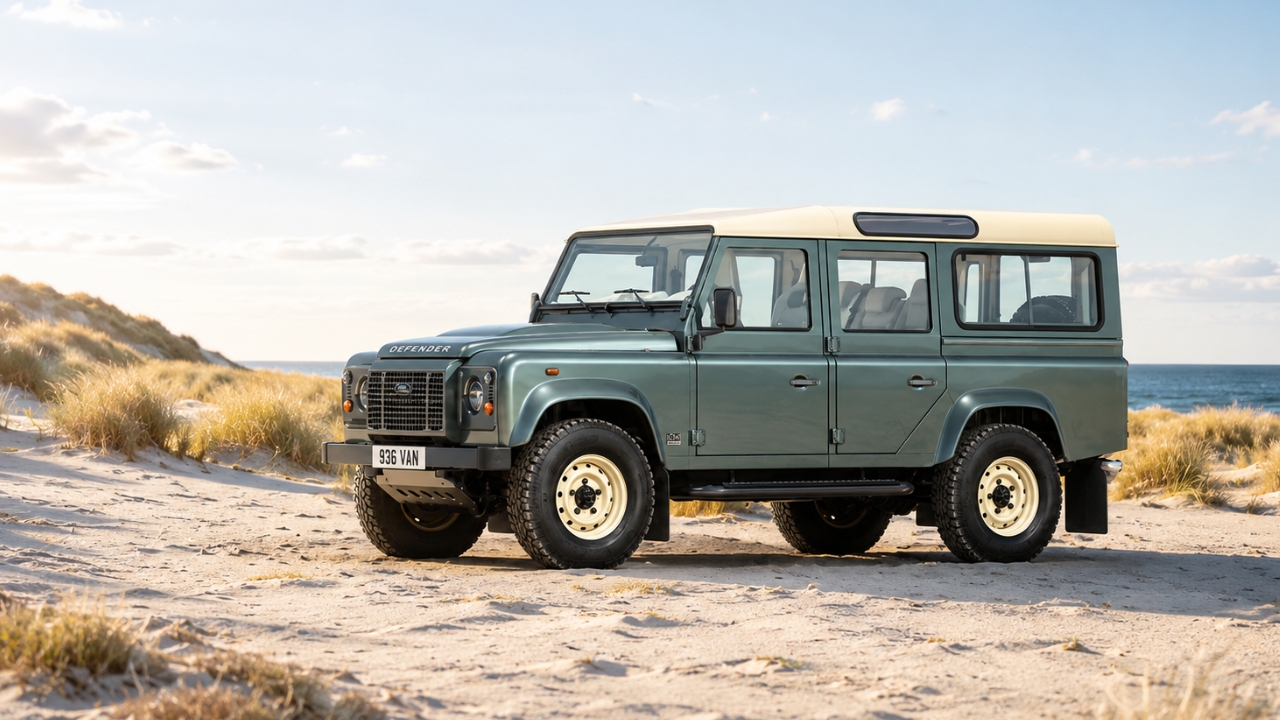
Image Credit: Land Rover | Classic Land Rover EV
A Classic Land Rover EV sounds like a contradiction at first. The old Land Rover experience has always been about the rattle, the hum, the diesel smell, the stiff gearshift, and that slightly agricultural feeling you either love or completely fail to understand.
Here’s the thing, though.
Once you sit behind the wheel of a properly converted classic 4×4, the argument changes fast. The body still has the square-shouldered charm. The cabin still feels honest. But the drivetrain? Smooth, quiet, instant, and far easier to live with. This is where vintage car restoration is heading at the luxury end.
A Classic Land Rover EV doesn’t try to erase the past. The best builds keep the original stance, dashboard character, driving position, and rugged visual appeal. What changes is the part that used to cause the most drama: the engine.
Old combustion engines have charm, yes. They also leak, cough, overheat, and punish you in traffic. An EV conversion removes much of that hassle while giving the vehicle instant torque.
And in an old 4×4, torque matters. You feel it the moment you move away. No waiting for revs. No clutch juggling. No smoky cold start. Just clean shove from a standstill.
The market for electric converted classic cars has moved well beyond hobby garages. The best classic luxury car electric restoration companies now treat these builds like coachbuilt commissions. Everrati Land Rover projects lean into OEM-grade polish. The Everrati Series IIA electric keeps the classic shape but adds a carefully packaged electric powertrain, refined interior work, and a more usable driving feel.
Lunaz classic cars go even more luxury. A Lunaz battery powered Range Rover is the kind of thing you imagine outside a countryside estate or parked near a coastal villa. Quiet, expensive, and deeply tailored. Then there’s the Inverted Range Rover. This one feels more performance-led. The Inverted Range Rover Tesla motor setup gives the classic Range Rover a level of pace the original V8 never came close to offering. Better yet, it still looks like the boxy icon.
For anyone considering a Classic car EV, these details matter:
The real value is not only silence or speed. It is making a classic usable without turning every journey into a mechanical gamble.
The Inverted Range Rover Classic EV shows why this space has become so interesting. It takes a familiar shape and gives it the muscle to feel modern. The idea of an Inverted Range Rover Tesla motor might sound wild, but from behind the wheel, it makes sense. The power delivery feels immediate. The cabin becomes calmer. The vehicle stops feeling like a weekend-only object and starts feeling like something you could actually drive often.
That’s the magic. The inverted range rover classic ev price is not casual money, of course. These are serious commissions. But buyers at this level are not shopping for cheap transport. They are paying for rarity, craftsmanship, performance, and a future-proofed ownership experience.
Not every owner wants a full ground-up luxury rebuild. Some want a cleaner, simpler way to keep a Classic Land Rover on the road. That is where the Electrogenic Land Rover kit makes sense. A well-designed electric conversion kit for classic land rover models can preserve much of the original structure while replacing the oily bits with electric drive. For purists, reversibility matters. If a system avoids cutting and welding, it protects the vehicle’s long-term story.
That is important in the collector world. A vintage 4×4 electric conversion should not feel like vandalism. Done properly, it feels like careful engineering.
Image Credit: Land Rover | Classic Land Rover
Let’s be honest. You do lose some theatre. The rattle and hum disappear. There’s no fuel smell. No mechanical clatter bouncing off stone walls. No sense that the whole vehicle is alive in a slightly chaotic way.
But you gain something else. You gain smoothness. Reliability. Better city manners. Quiet off-road control. Cleaner running. And in some builds, properly quick acceleration.
An Electric Range Rover or Classic Land Rover EV will not suit every collector. Some people want the original engine, original flaws, and original noise. Fair enough. But for drivers who want the shape without the stress, the EV route is hard to dismiss.
The old rattle and hum of classic motoring is not disappearing; it is being reworked for a different kind of luxury buyer. A Classic Land Rover EV keeps the design, presence, and sense of occasion that made these vehicles special, but adds the silence, torque, and reliability modern drivers expect. Everrati, Lunaz, Inverted, and Electrogenic all approach the idea differently, from bespoke luxury rebuilds to more reversible kit-based conversions. The right choice depends on budget, originality, driving style, and how often the owner actually wants to use the vehicle. For me, the appeal is simple: if electrification keeps these icons moving, not parked, it deserves a proper place in the luxury car conversation.
Image Credit: Jaguar | Jaguar Type 01 The Jaguar Type 01 arrives with three electric…
Image Credit: Volkswagen | Volkswagen ID Tiguan The Volkswagen ID Tiguan gives the brand’s electric…
Image Credit: Ferrari | Ferrari 296 Modificata The Ferrari 296 Modificata cannot compete in conventional…
Image Credit: Ferrari | The Ferrari Luce For decades, Ferrari’s identity lived in sound. A…
Image Credit: Bugatti | bugatti veyron update Back in 2005, the Bugatti Veyron didn’t just…
Image Credit: Carscoops | Genesis Wingback When you look at the Genesis Wingback wagon, you…