








Image Credit: Honda | reliable four cylinder
There’s something oddly satisfying about an engine that simply refuses to retire. In an era where automakers constantly replace platforms, shrink engines, or pivot toward electrification, one reliable four-cylinder has quietly kept showing up year after year, proving that good engineering still matters.
We’re talking about Honda’s legendary K-Series. First introduced in 2001, this iconic Japanese four-cylinder somehow feels both old school and surprisingly modern at the same time. I’ve spent enough time around Hondas to know one thing: when enthusiasts, mechanics, and long-term owners all agree on something, it’s worth paying attention to. And the K-Series? It sits in rare company.
Here’s the thing. Most engines don’t survive anywhere close to 25 years in active engine production. Stricter emissions laws, changing technology, and cost-cutting decisions usually force redesigns long before that milestone. Yet Honda’s K-Series still powers vehicles today, from practical crossovers to serious performance machines.
Why This Reliable Four Cylinder Still Exists
The secret isn’t luck. It starts with the fundamentals. Back in the early 2000s, Honda approached the K-Series with a clean-sheet mindset. Instead of recycling older architecture, engineers focused on building something rigid, efficient, and adaptable. That decision changed everything.
Unlike many standard commuter engines of the era, the K-Series featured a deep-skirt aluminum block design. That might sound technical, but the result was simple: less vibration, better stability, and stronger long-term durability. When you rev one hard, it feels composed rather than strained.
Better yet, Honda ditched fragile timing belts and switched to a timing chain setup. That one move dramatically improved engine longevity, helping owners avoid one of the bigger maintenance headaches older engines often faced.
Then came the crown jewel of Japanese car engine tech: i-VTEC.
At low RPMs, the engine behaves calmly and efficiently. Smooth. Relaxed. Easy to live with in traffic. Push harder, though, and the personality changes. Suddenly, it wakes up and pulls aggressively toward higher revs. It’s one reason this four cylinder engine earned a reputation for balancing daily practicality with genuine driving excitement.
Key Specs That Helped It Last
A lot of reliable engines earn respect through simplicity. The K-Series earned it through smart engineering choices.
Key Highlights:
- Deep-skirt aluminum block for structural strength
- Chain-driven dual overhead cam setup for durability
- Intelligent i-VTEC system for efficiency and performance
- Naturally aspirated and turbocharged adaptability
- Strong aftermarket tuning potential with durable internals
- Proven high-mileage reliability across generations
Actually, adaptability may be the biggest reason this became one of the longest production car engines in modern automotive history.
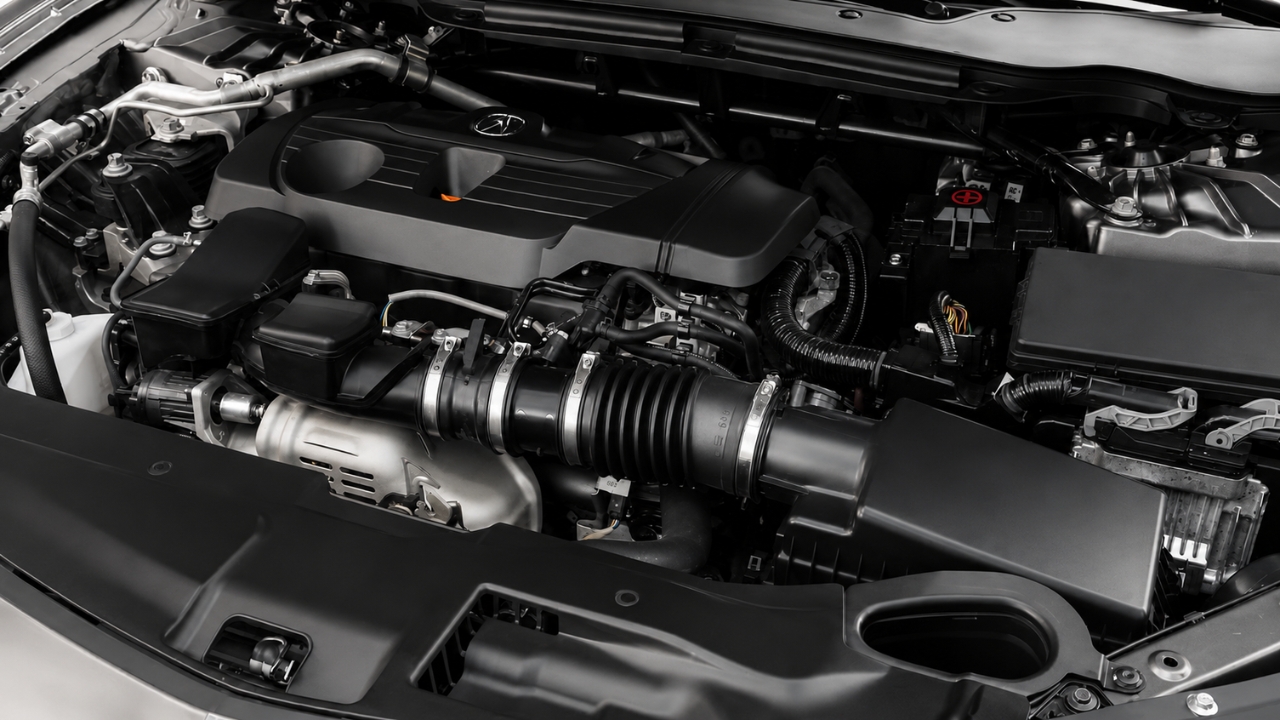
Image Credit: Honda | reliable engines
The K20C Kept The Legacy Alive
A 25 year old Japanese engine doesn’t survive by standing still. Honda understood that emissions rules and turbocharging demands were changing fast, so the K-Series evolved without losing what made it special. Enter the K20C.
Modern versions now use reinforced closed-deck construction to handle higher combustion pressures, especially under boost. Engineers also improved thermal management with optimized coolant routing and direct injection technology. Translation? Better cooling, more stability, and less wear during hard driving.
That matters because performance engines usually sacrifice longevity. This one somehow didn’t. It’s why the same foundation can comfortably power an Acura RDX during weekday commutes and then turn into a track-ready monster inside a Civic Type R on the weekend. Few examples of Japanese automotive engineering manage that balance so well.
Why Enthusiasts Still Swear By It
Spend enough time around garages, track days, or enthusiast forums and one pattern becomes impossible to ignore: people trust the K-Series. There’s a reason it often appears in conversations around bulletproof engines and durable automotive engines. Many naturally aspirated versions have crossed staggering mileage numbers with nothing more than regular oil changes, spark plugs, and basic maintenance.
Plus, the aftermarket support remains enormous. Builders regularly modify these motors for serious horsepower gains because the platform handles extra stress remarkably well. Here’s the wild part: enthusiasts even remove expensive European performance engines and replace them with Honda K-Series setups. That trend alone says a lot about car motor reliability. Nobody willingly swaps out prestige unless the replacement genuinely delivers.
As automotive trends continue shifting toward electrification, the K-Series remains proof that mechanical excellence still leaves a lasting mark. This reliable four-cylinder didn’t survive nearly 25 years because of nostalgia or luck. It stayed relevant because Honda got the basics right from day one: strength, cooling, efficiency, and adaptability. And honestly, when people still trust an engine enough to daily drive it, race it, and swap it into sports cars decades later, you’re no longer looking at just another motor. You’re looking at one of the most iconic examples of Japanese car tech still alive today.