








Image Credit: Gensis | Genesis Magma GT3
The Genesis Magma GT3 has landed with the kind of attitude you don’t expect from a brand once known mainly for calm luxury sedans. Revealed ahead of the 24 Hours of Le Mans, this GT3 racing concept looks loud, sharp, and fully aware of the fight it wants to enter.
Here’s the thing: this isn’t just orange paint and motorsport theatre. The concept shows how Genesis wants to move from polished executive comfort into proper endurance racing tech. And if you’ve ever watched a GT car hammer through a fast corner at night, you know this world does not reward half-effort.
A New Side of Genesis
Genesis Magma has always hinted at performance, but this reveal turns the volume up. The brand is no longer just talking about Genesis high performance vehicles. It is building a motorsport identity around them.
The timing matters too. Dropping the GT3 racing concept around the Circuit de la Sarthe Genesis reveal gives the car instant credibility. Le Mans is not a casual backdrop. It’s where brands prove stamina, engineering discipline, and nerve.
The Genesis Magma racing project already has the GMR-001 Hypercar in the spotlight. Now, the Genesis Magma GT3 concept suggests the brand is thinking beyond one class.
Why Genesis Magma GT3 Feels Important
The Genesis Magma GT3 matters because GT3 racing connects more closely to road cars than the Hypercar class. Hypercars are extreme prototypes. GT3 cars still carry a stronger link to machines buyers can recognize.
That is why this concept feels clever. The Magma GT road car concept gives Genesis a potential halo product, while the race version gives it purpose. Wide bodywork, aggressive aero, a fixed rear wing, and cooling cutouts all point toward a car shaped by track work, not showroom posing.
Better yet, the concept does not lose the brand’s design language. The stance is brutal, but the surface treatment still feels Genesis. That balance is hard to pull off.
The GMR-001 Hypercar Sets the Stage
Before this GT3 idea appeared, the Genesis GMR-001 already made the brand’s motorsport expansion Europe plan feel real. The Genesis GMR 001 Hypercar debut puts the company directly into top-level endurance competition. Built for the Hypercar class, it gives Genesis a brutal learning lab for motorsports tech, hybrid systems, aero behavior, cooling, braking, and durability.
That matters for the GT3 concept.
Racing programs feed on data. The harder the race, the better the lessons. Le Mans punishes weak cooling, soft brakes, poor aero stability, and bad packaging. If Genesis learns fast in the Hypercar, those lessons can shape future GT3 and road-car development.
Key Specs and Design Highlights
The Genesis Magma GT3 is still a concept, so full race specs are not locked in. But the direction is clear.
- Built around the Magma GT performance concept cars direction
- Designed with GT3 technical regulations in mind
- Wider track for stronger grip and stability
- Fixed rear wing for high-speed downforce
- Race-ready bodywork with aggressive aero surfaces
- Advanced thermal management for endurance racing loads
- Mid-engine layout influence from the Magma GT architecture
- Strong visual link to Genesis Magma racing identity
This is not a soft styling package. It looks like a car built to survive heat, kerbs, traffic, and 24-hour punishment.
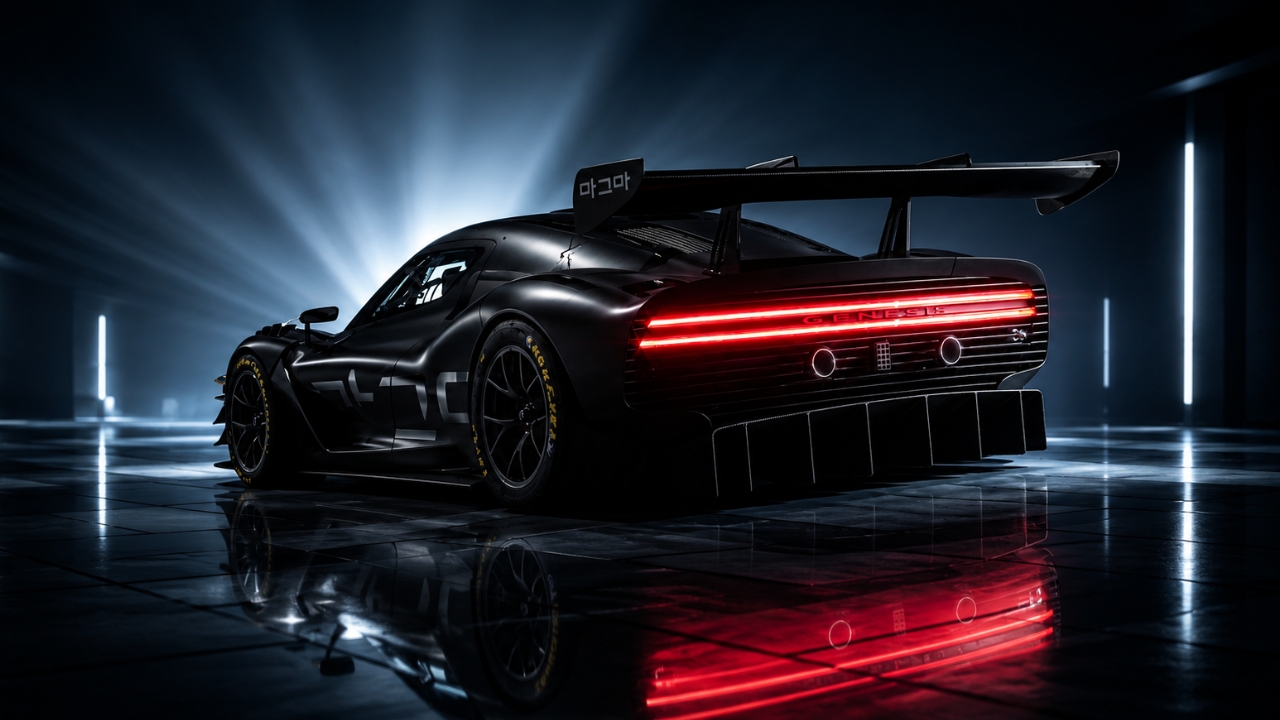
Image Credit: Gensis | GT3 racing concept
The GT3 Category Makes Sense
GT3 is where brands build emotional credibility. The cars look close enough to road machines to make fans care, but they race hard enough to expose weak engineering. That is why genesis magma racing future gt3 category plans feel worth watching. A Genesis Magma GT3 Concept Le Mans reveal tells enthusiasts that the company wants to be seen beside established European performance names. Not quietly. Not politely. Directly.
Korean motorsports’ Le Mans involvement has already become more serious through the GMR-001. A GT3 program would bring the fight closer to customer racing, private teams, and future performance buyers. That’s where brand loyalty gets built.
What It Could Mean for Road Cars
The most exciting part is not only the race car. It’s what comes after. Endurance racing tech has a habit of improving road cars. Heat management, brake cooling, lightweight materials, aero efficiency, chassis balance, and powertrain calibration all matter on track. Eventually, they influence production thinking.
If Genesis uses this properly, Magma could become more than a badge. The Magma GT road car concept may borrow the drama. Future Genesis high-performance vehicles may borrow the discipline. That is the difference between a marketing sub-brand and a real performance division.
Conclusion
The Genesis Magma GT3 feels like a warning shot. The brand has stepped onto the Le Mans stage with a GT3 racing concept that looks aggressive, purposeful, and surprisingly believable. Paired with the Genesis GMR-001 Hypercar programme, it shows a company trying to build performance credibility the hard way: through endurance racing. The concept still needs development before it becomes a real GT3 contender, but the ingredients are there. Big aero, serious cooling, racing intent, and a clear link to future road cars. If Genesis keeps this pace, Magma may soon mean more than luxury with orange paint. It may mean a proper fight on the grid.